Grooming
Pet Grooming Brush vs Dryer Brush
Compare pet grooming brushes and dryer brushes by coat type, drying needs, cleaning design, and comfort at home.
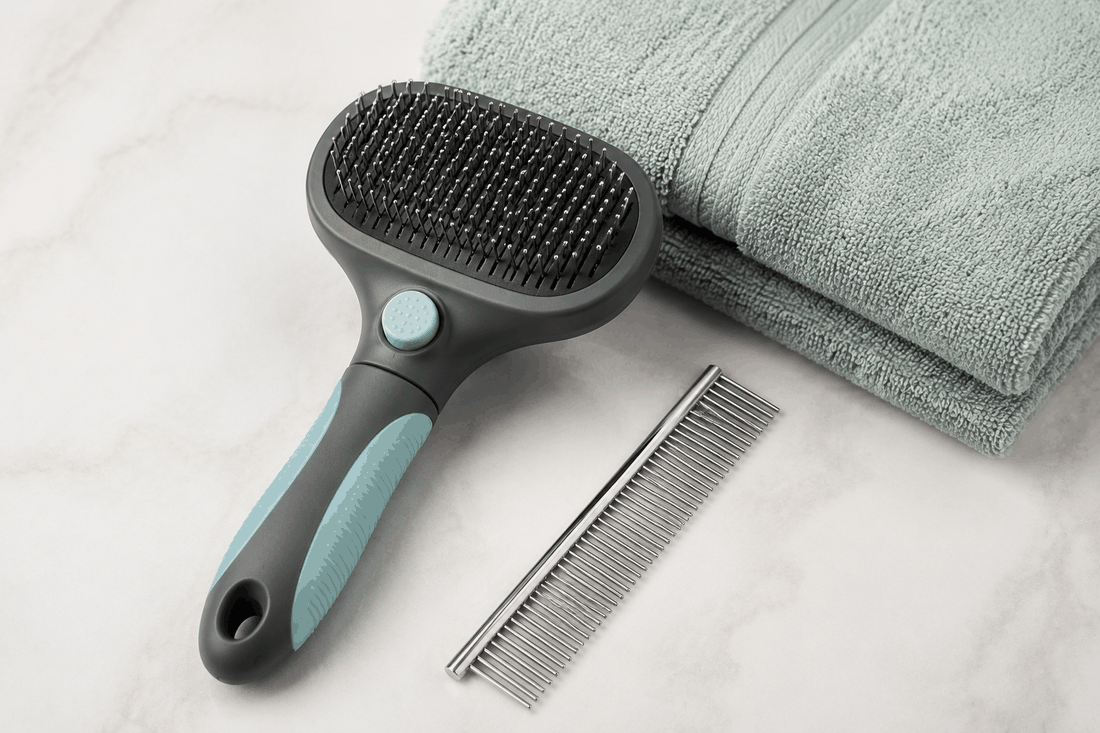
Choose by the task
A regular grooming brush helps with loose hair and coat maintenance, while a dryer brush is built for post-bath drying and brushing together.
Comfort and cleaning are the deciding details
Look for rounded contact points, easy hair release, controlled airflow, and parts that can be wiped clean after use.
FAQ
How should I compare pet grooming tools?
Compare the tool by coat type, task, comfort, cleaning design, and whether it fits your pet's tolerance at home.
Is a dryer brush different from a regular grooming brush?
Yes. A regular brush helps with loose hair and coat care, while a dryer brush is designed for drying and brushing after baths.
What makes a grooming tool easier to clean?
Easy hair release, wipeable surfaces, and simple contact points make routine cleanup faster.
Can one grooming tool work for every pet?
Usually not. Coat length, shedding level, skin sensitivity, and bath routine should guide the choice.
What should I check before buying?
Check coat suitability, contact points, cleaning design, product photos, and stock country before checkout.