Travel
Soft Pet Crate vs Hard Crate
Direct answer: Choose a soft pet crate for lightweight short trips, airflow, and easier storage. Choose a hard crate when you need stronger structure, easier deep cleaning, or more protection during rough handling.
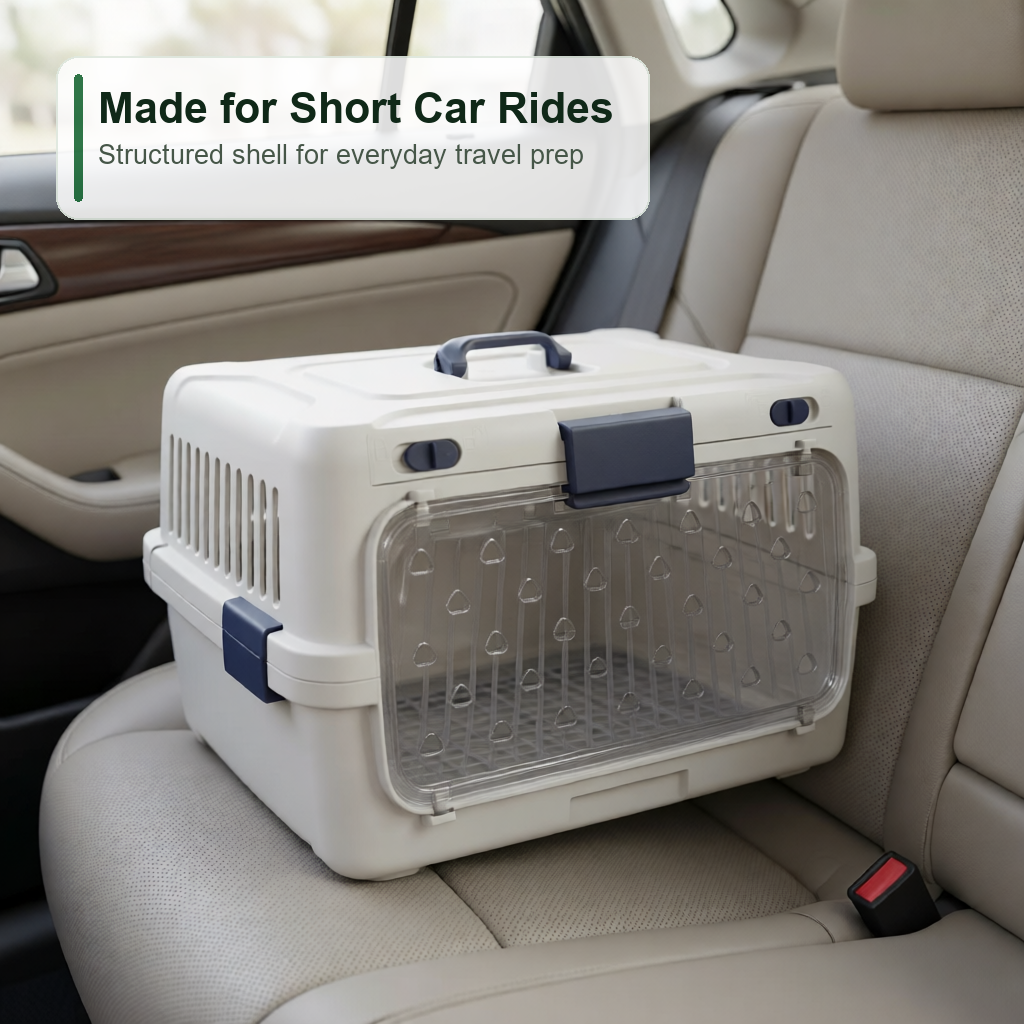
Best for
- Owners comparing travel crate types
- Cats and small dogs on short trips
- Vet visits, home rest, and car errands
Comparison checklist
Structure
What to check: Soft frame flexibility versus hard shell rigidity.
Why it matters: A crate that collapses or bends too much can make pets feel unstable.
Cleaning
What to check: Wipeable shell, removable pads, seams, and fabric areas.
Why it matters: Hard crates are often easier to disinfect; soft crates may be easier for comfort but need fabric care.
Storage
What to check: Foldability, weight, and where it will be kept between trips.
Why it matters: A crate that stores easily is more likely to be used for everyday errands.
FAQ
Are soft pet crates safe for car travel?
They can be useful for comfort and positioning, but they are not automatically crash-safe. Use proper restraints when crash protection is the priority.
When is a hard crate better?
A hard crate is usually better for deep cleaning, strong structure, and situations where the carrier may be bumped or handled roughly.
Which crate is better for anxious pets?
It depends on the pet. Some prefer mesh visibility and soft sides, while others settle better in a more enclosed hard carrier.