grooming
Grooming Brush vs. Dryer Brush for Home Pet Care
Choosing between a grooming brush and dryer brush? Learn how each tool serves different home pet care needs, from coat maintenance to post-bath drying.
Understanding the Primary Function of Each Tool
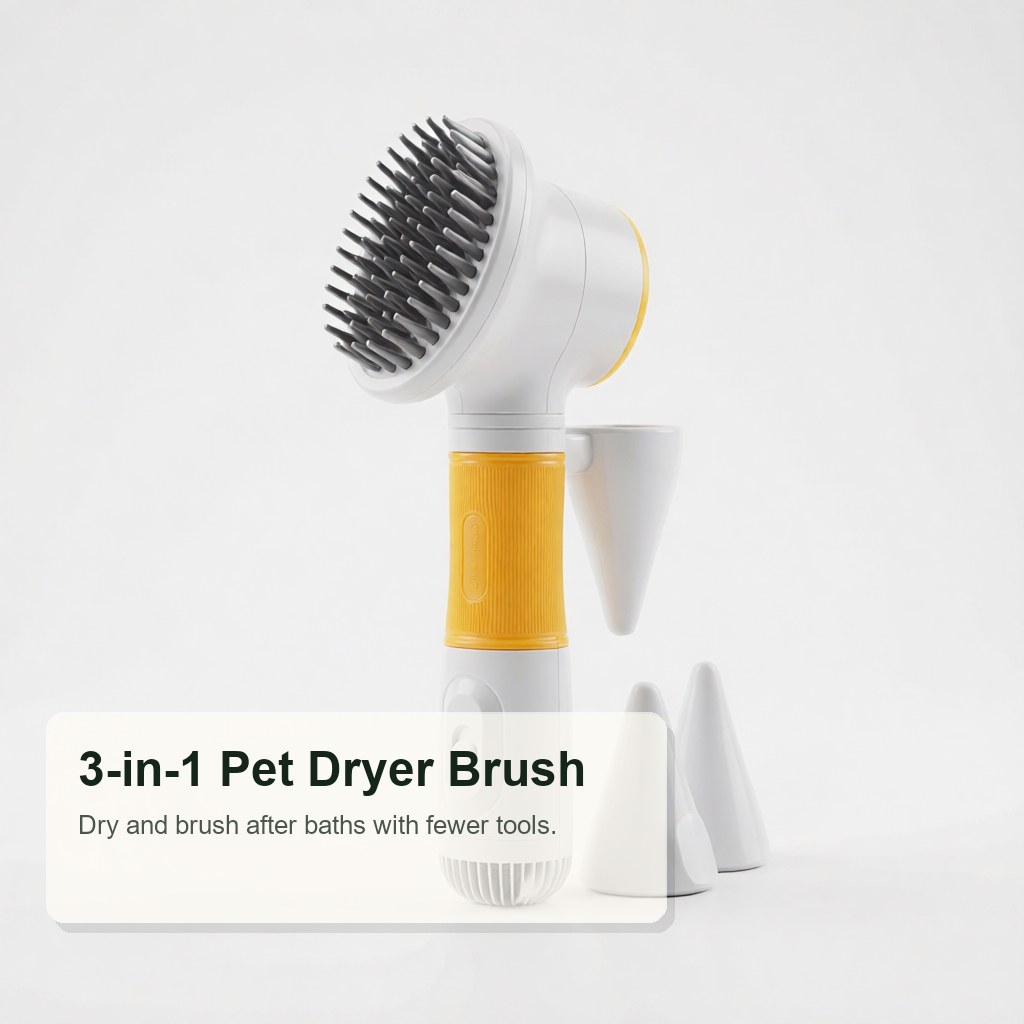
The core difference lies in their intended use case. Standard grooming brushes, such as slicker brushes or undercoat rakes, are mechanical tools designed to work through the hair shaft. They help distribute natural oils, remove dead undercoat, and may help reduce matting when the pet is dry. In contrast, a dryer brush integrates a gentle heating element or fan with bristles. Its primary purpose is not just brushing but actively moving air through the coat to evaporate moisture more efficiently than towel drying alone.
When to Use a Standard Grooming Brush
You should reach for a traditional grooming brush during regular maintenance routines. If your pet sheds heavily or has long hair prone to tangles, a daily or weekly session with a slicker brush or pin brush can keep their coat healthy and reduce hair around the home. These tools are also useful for stimulating blood flow to the skin and checking for parasites or skin irregularities during routine checks. They require no power source and are safe for use on completely dry animals.
When to Use a Dryer Brush
A dryer brush is most effective immediately after a bath, swim, or if your pet gets caught in the rain. It helps blow-dry the coat while simultaneously brushing out tangles that might form as the hair dries. This can significantly reduce the time it takes for a pet to become fully dry, which is particularly helpful for thick-coated breeds or pets who dislike traditional blow dryers. Ensure the device is used on a low-heat setting to avoid discomfort, and always monitor your pet's reaction to the noise and airflow.
Safety and Comfort Considerations
Regardless of the tool chosen, comfort is paramount. Standard brushes should have rounded tips to avoid scratching the skin. When using a dryer brush, ensure the temperature remains cool to warm, never hot, and keep the device moving to may help reduce concentrated heat on one spot. Some pets may find the noise of a dryer brush startling; introduce it gradually. For pets with sensitive skin or existing dermatological conditions, consult a veterinarian before starting any new grooming regimen to ensure the tools do not exacerbate irritation.
FAQ
Can I use a dryer brush on a dry coat?
It is generally unnecessary and may over-dry the skin or coat. Dryer brushes are designed to remove moisture; using them on a dry coat offers little benefit compared to a standard grooming brush.
Which is better for shedding control?
A standard grooming brush, such as an undercoat rake or deshedding tool, is typically more effective for removing loose hair from a dry coat. A dryer brush focuses on drying rather than heavy de-shedding.
Related guides and products
- Shop grooming products
- 3-in-1 Pet Dryer Brush for Faster After-Bath Grooming
- Pink Upgraded 3-in-1 Pet Dryer Brush for After-Bath Grooming
- Pink Standard 3-in-1 Pet Dryer Brush for After-Bath Grooming
Topic cluster: Grooming and Shedding Control
Brush and dryer-brush comparisons for owners who need easier at-home grooming, coat cleanup, and after-bath routines.