feeding
How to Introduce a Puzzle Feeder to a Bored Indoor Cat
A step-by-step guide to introducing a puzzle feeder to your indoor cat, helping make mealtime more engaging and mentally stimulating.
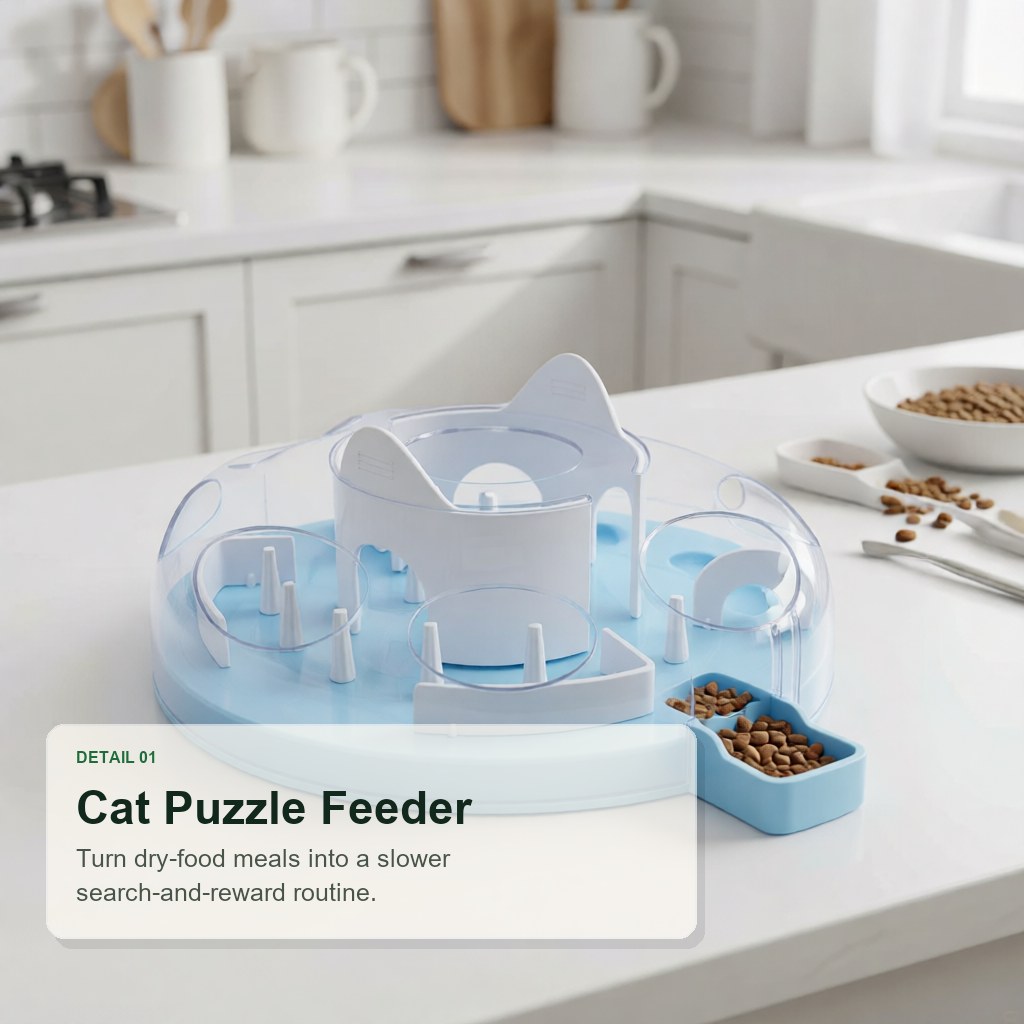
Why Puzzle Feeders Can Help Indoor Cats
Indoor cats often have fewer opportunities to hunt, explore, and forage compared to outdoor cats. A puzzle feeder can add mental stimulation by turning mealtime into an interactive activity. Some cats may become more engaged during meals, and the slower pace of eating can help may help reduce gulping. The key is matching the feeder's difficulty to your cat's current ability so they remain interested without becoming discouraged.
Choosing a Feeder That Matches Your Cat's Skill Level
Puzzle feeders vary widely, from simple flat mats where kibble is scattered across the surface to more complex designs that require sliding, lifting, or rotating parts. For a cat new to this type of feeder, begin with the simplest option. Consider your cat's size, paw dexterity, and eating speed when selecting a feeder. If your cat tends to eat quickly, a slower introductory design may be a good starting point. Review the manufacturer's guidelines for any age, size, or usage recommendations before purchasing.
Step-by-Step Introduction Process
Begin by placing the empty feeder near your cat's regular feeding spot for several days. Allow your cat to sniff and inspect it at their own pace without any food inside. Once they seem comfortable nearby, sprinkle a small amount of their regular kibble on or around the feeder. When your cat is eating from that area without hesitation, move a few pieces into the easiest compartments. Gradually increase the challenge over subsequent sessions, keeping each session brief and positive. Watch for signs of frustration such as walking away, swatting the feeder aggressively, or vocalizing, and step back to an easier level if needed.
Reading Your Cat's Response and Adjusting
Cats vary in how quickly they adapt to puzzle feeders. Some show interest within a few days, while others may need more time. If your cat appears confused or uninterested, return to a simpler step and proceed more slowly. Positive signs include a relaxed posture and steady engagement with the feeder. Indicators that the difficulty may be too high include flattened ears, tail flicking, or abandoning the feeder altogether. You can try placing a small amount of wet food inside to increase motivation. If your cat shows persistent disinterest over multiple attempts, consider consulting a veterinarian or animal behaviorist for guidance.
Building a Consistent Routine
Once your cat has adjusted, you can incorporate the puzzle feeder into their regular feeding schedule. Using it for one or two meals per day may provide enough variety without overcomplicating their routine. Rotating between different feeder types occasionally can help maintain novelty. Always supervise initial use and store feeders in a clean, dry place between meals. For cleaning instructions or product-specific care, refer to the manufacturer's guidelines.
FAQ
How long does it take for a cat to adjust to a puzzle feeder?
Adjustment time varies. Some cats show interest within a few days, while others may take one to two weeks or longer. Progress depends on your cat's personality, prior experience with interactive toys, and how gradually you increase the difficulty.
Can puzzle feeders help with a cat's eating speed?
Puzzle feeders can encourage cats to eat more slowly by requiring them to work for their food. This may help may help reduce gulping during meals. However, they are not a substitute for veterinary guidance if your cat has specific digestive concerns.
Is it safe to leave a puzzle feeder out all day?
It is generally safer to use puzzle feeders during supervised meal times rather than leaving them accessible all day. This helps keep food fresh and allows you to monitor your cat's interaction with the feeder. Always follow the manufacturer's safety and cleaning recommendations.